II. The S Stands for Krypton
By the late 1970s, the tremendous success of Star Wars had paved the way for big-budget summer films with more idealistic visions than those typically found in theaters. Superman was a character perfectly suited for that cultural zeitgeist. Recognizing the risks involved in such an ambitious project, producers Alexander and Ilya Salkind sought high-profile talent to spearhead the production. They succeeded in securing famed author Mario Puzo to write the screenplay, and none other than Marlon Brando—widely regarded as one of the greatest actors of his generation—to portray Jor-El.
Although a significant portion of Puzo’s script was ultimately discarded, it introduced a pivotal alteration to the mythology of the Last Son of Krypton: the Kryptonian origin of the “S” symbol. In the screenplay, Jor-El puts “Superman’s symbol—or Krypton’s” inside the rocket carrying Kal-El to Earth, implying that the emblem may symbolize the planet itself.
The rationale behind Jor-El’s decision to wear the emblem in the film remains nebulous. For many years, there were unsubstantiated rumors suggesting that Marlon Brando personally proposed it, but no concrete evidence supports this claim. Considering Brando’s generally indifferent demeanor towards many of his roles, it appears improbable that he was particularly invested in the costume design.
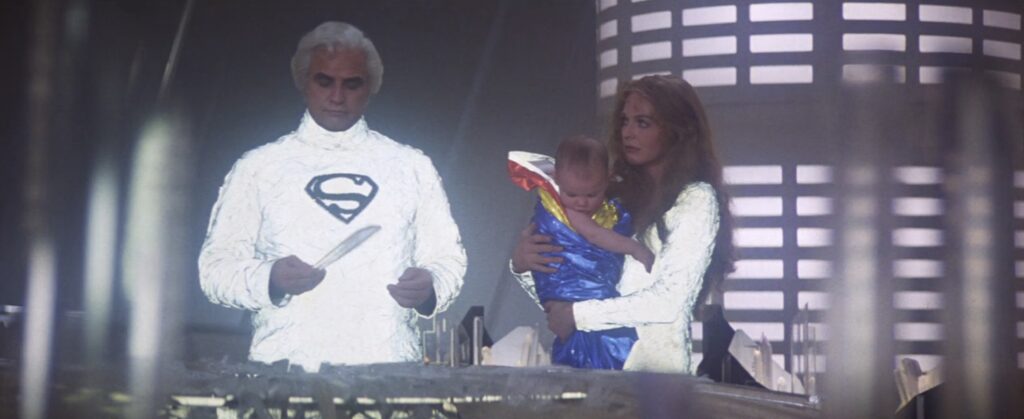
Regardless, the decision was finalized: Jor-El would wear the symbol in Superman: The Movie, released in 1978. Director Richard Donner showcased other members of the Kryptonian Council wearing similar—yet distinct—symbols, unequivocally establishing the “S” as the crest of the House of El. In the screenplay, Lois Lane bestows Kal-El with the name “Superman,” reinforcing the mythical tone of this novel origin. Neither the name nor the symbol would be chosen by Clark himself; both would be externally bestowed upon him, implying that he must earn them through his actions.
A particularly memorable aspect of the film is the suit, which appears as if conjured by magic at the conclusion of Clark’s “training.” This moment, in which the late, great Christopher Reeve dons the costume for the first time in an interpretation that stands the test of time. This portrayal arguably represents the most iconic vision of the character on screen.
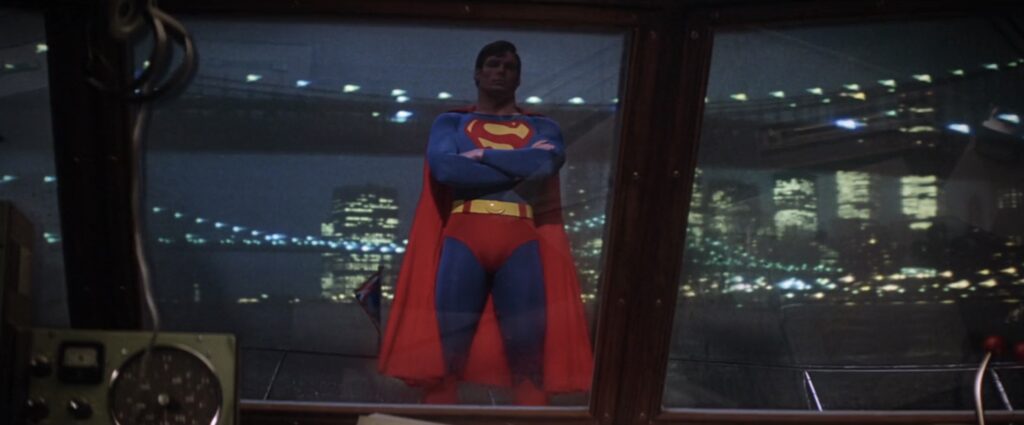
This Kryptonian origin of the costume would not return until much later. However, the idea that the name and emblem are given to Kal-El rather than created by him would become a permanent fixture of the mythology—though it would take time for this to be consistently reflected across media.
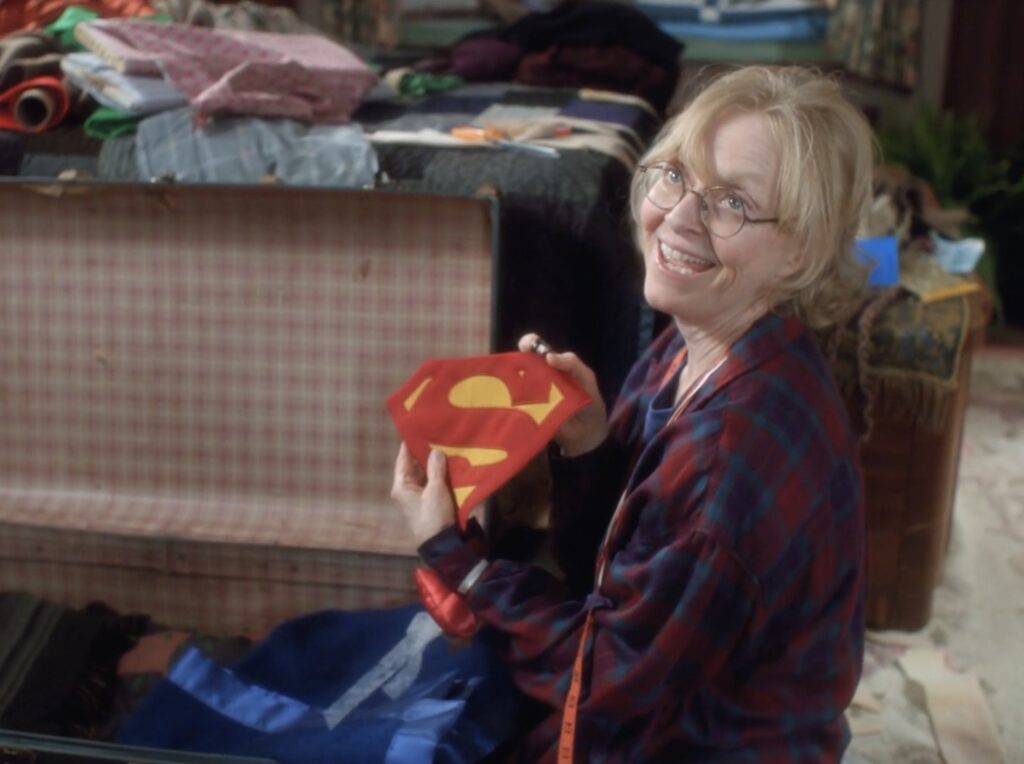
Lois & Clark: The New Adventures of Superman drew significant inspiration from John Byrne’s post-Crisis reboot, but diverged notably in its treatment of the symbol’s origin. Here, once again, it is of Kryptonian provenance. The emblem is found among the baby blankets accompanying Kal-El when Ma and Pa Kent discover him. Ma suggests it’s exactly what the suit needs—referring to the version worn by Dean Cain in his portrayal of Superman.
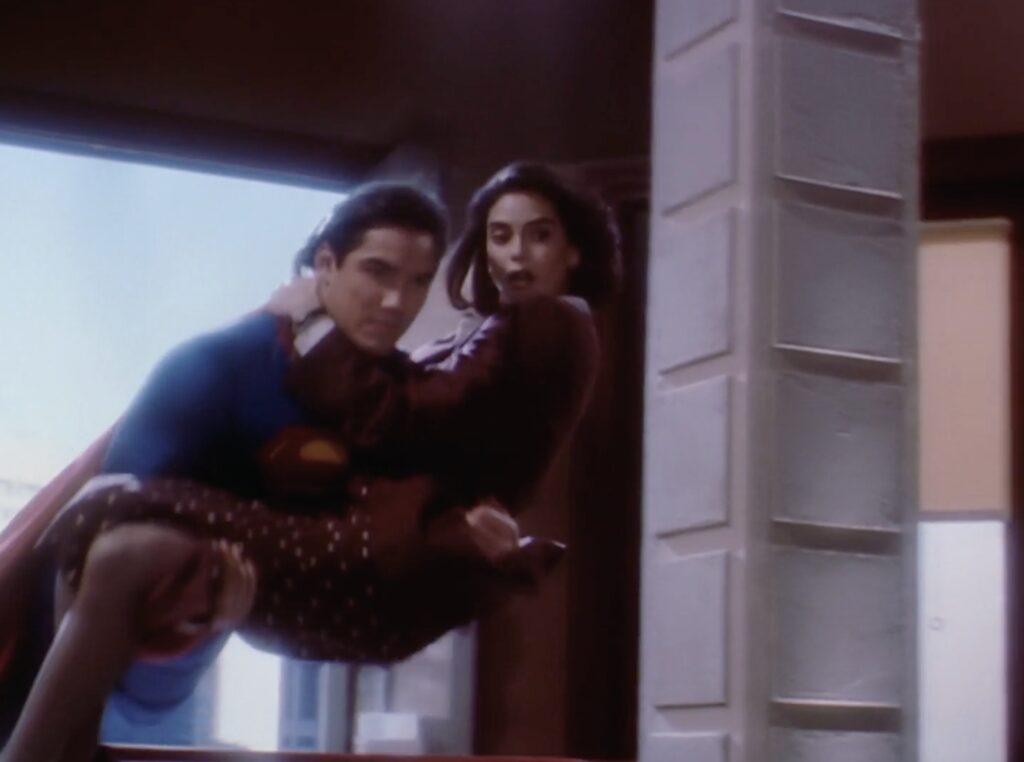
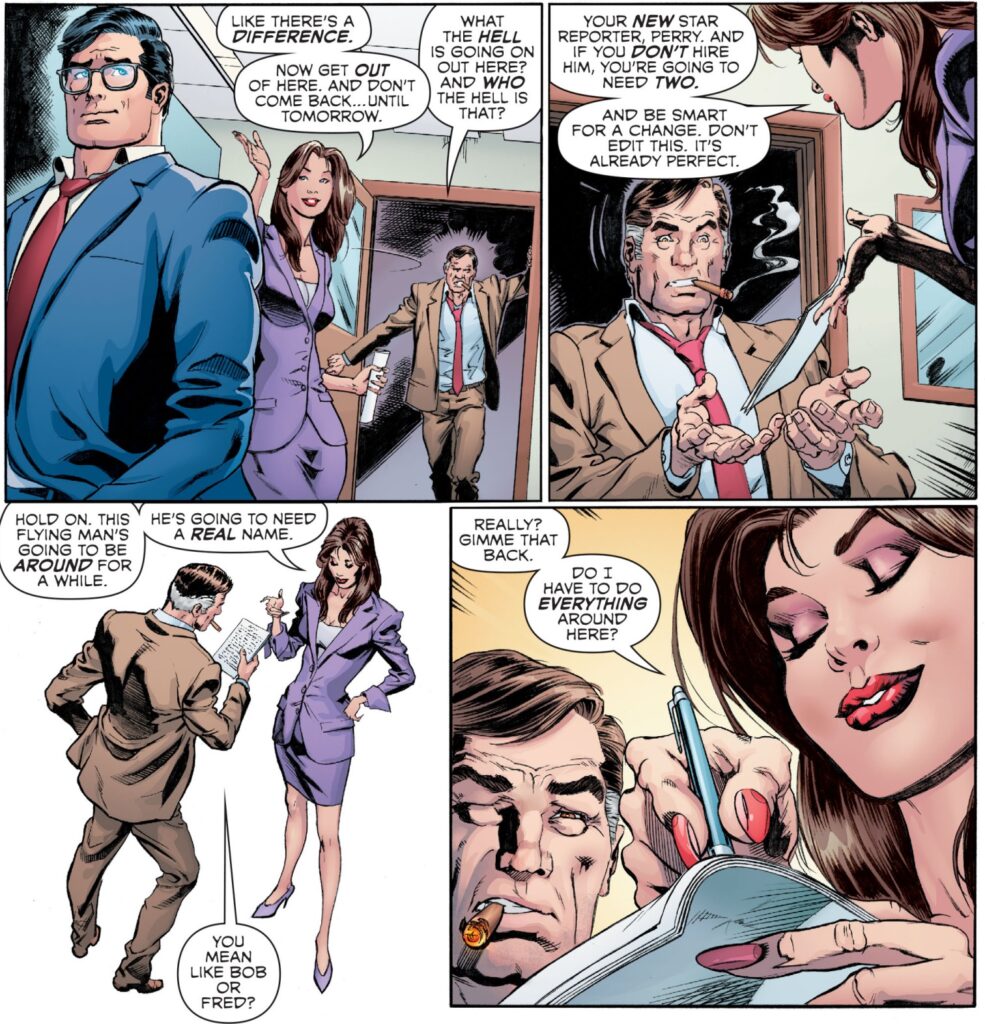
In a scene clearly meant to evoke Superman: The Movie, a stunned Lois is the one to name him “Superman.”
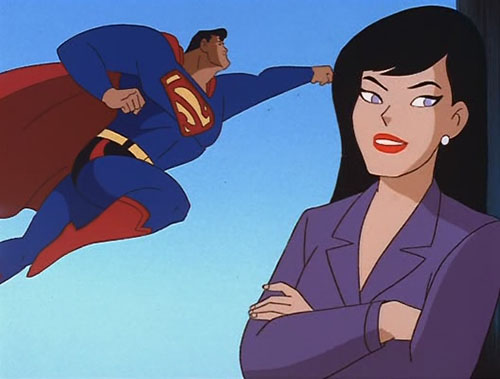
Come 1996, Bruce Timm produced a new adaptation of Superman in the form of Superman: The Animated Series as a follow up to his acclaimed Batman animation. Its opening three episodes, titled “The Last Son of Krypton,” presented a near perfect interpretation of the origin story. Notably, the symbol is never explicitly explained. It is absent from the scenes depicting Krypton and does not appear on Jor-El’s design, which is more inspired by Jack Kirby than previous portrayals. Nevertheless, the emblem is unmistakably Kryptonian and is displayed on a device that synchronizes with Clark’s mind, transmitting a message from his kryptonian parents.

Apart from the “S,” this iteration also features Lois drawing a direct parallel between the Man of Steel and the concept of the Übermensch, as expounded upon by German philosopher Friedrich Nietzsche.
Smallville, the long-running television series starring Tom Welling, was known both for its appealing and engaging lead characters and for its flexible and often contradictory approach to Superman lore. In this version, the “S” symbol has two separate origins, three distinct representations, and four different meanings.
For now, let us focus on the Kryptonian version—known in the series as the Mark of El. This version resembled an infinity symbol rotated 90 degrees, enclosed within a pentagon. According to the show’s mythology, it literally meant “Air,” and first appeared in Season 2 as a mark seared into Clark’s chest by a projection of Jor-El, in a rather painful example of paternal bonding.
The symbol’s first appearance occurred in Season 1, Episode 20, Obscura, as part of the carvings on a Kryptonian Key:
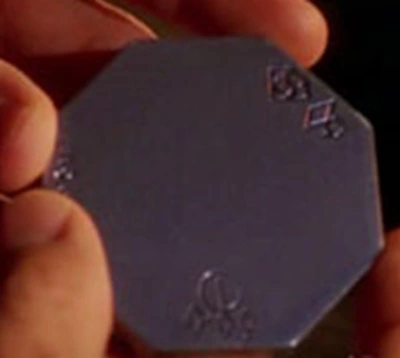
Notably, other symbols on the key translated to “Hope”—symbols Clark would later burn into the Kent family barn doors. However, those were not specific to the House of El. Smallville was the first story to assign an external meaning to the El family crest, interpreting it—“Air”—as a metaphor for the character’s evolving nature.
Of course, Smallville could not resist complicating matters further. In Season 6, the character Raya is introduced—an assistant to Jor-El who had survived Krypton’s destruction by escaping into the Phantom Zone. To protect her, Jor-El gives her a crystal engraved with the El family’s crest. From that point onward, the recognizable version of the “S” is used in the show.
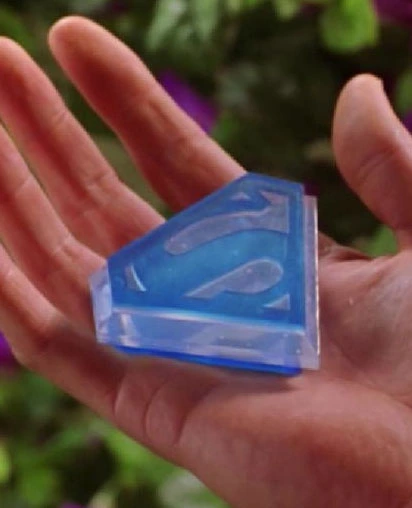
As a side note, this El emblem is also identified as the Kryptonian letter for “S.”
It wasn’t until 2003 that the Kryptonian origin of the symbol would be introduced in the comics, thanks to Mark Waid’s Superman: Birthright:
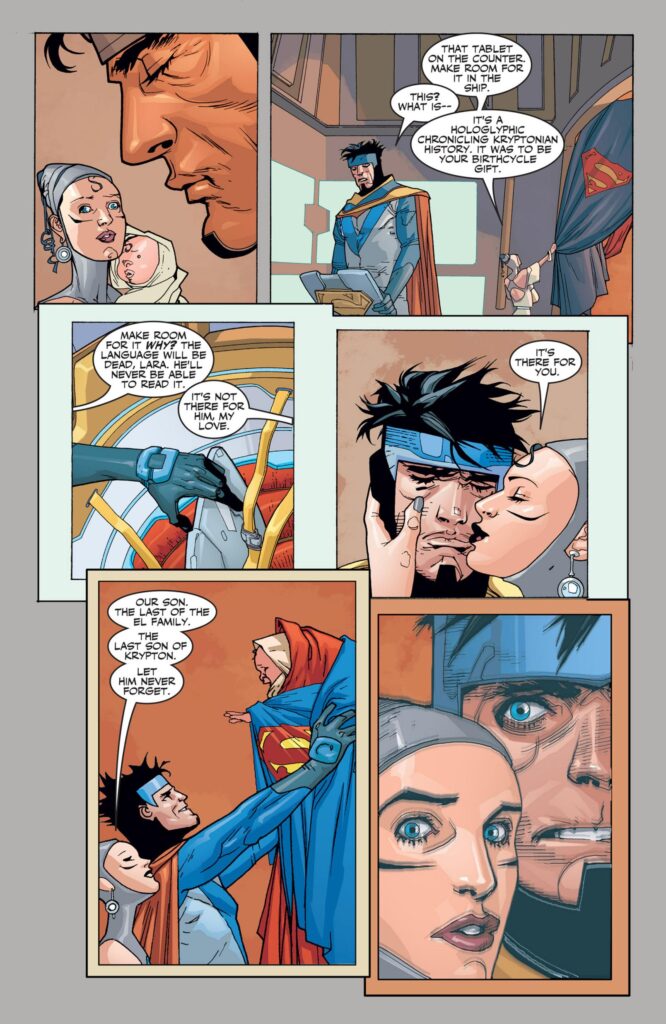
Once again, Ma is responsible for designing the rest of the suit:
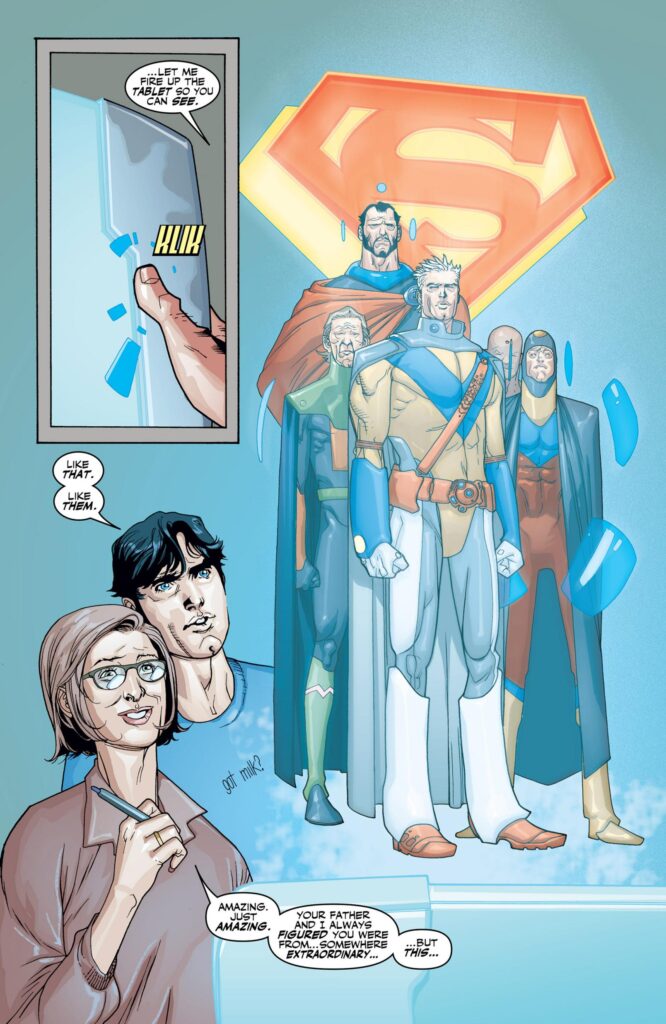
And the name “Superman” is given to Kal-El by the expected courageous journalist:
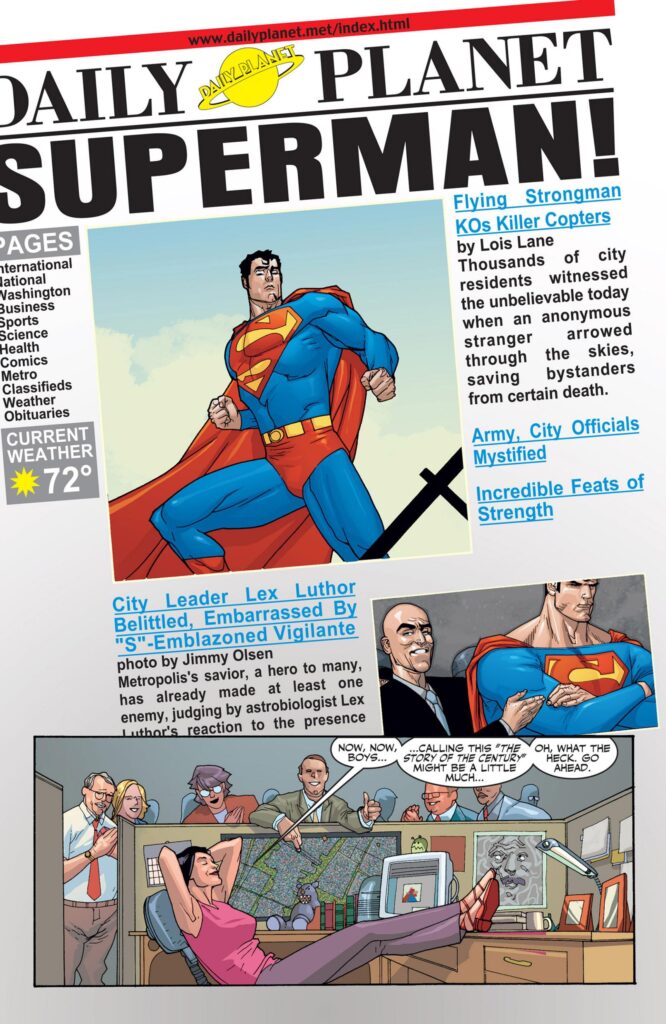
In this case, it’s important to note that while Birthright introduces the now-famous concept of the “S” meaning Hope, that meaning is earned through Superman’s actions. Initially, the symbol—like in Puzo’s screenplay—represents all of Krypton. Waid rejected the idea that a humble man like Clark would design an “S” for “Superman,” with or without Pa’s help. Nor did he believe it made sense for it to be the crest of the House of El—because Superman, in his view, did not merely represent his family, but the entirety of his lost civilization. (“He’s not the Last Son of the House of El,” Waid once wrote.)
This idea would linger until DC continuity shifted again with Infinite Crisis. While this era didn’t feature a full retelling of Superman’s origin, it introduced a modified version that included elements from the Donner film and a vague reintegration of Superboy’s career—an aspect John Byrne had previously removed. In 52 #2 (2006), a series co-written by Waid himself, it is established that from that point forward, the “S” officially means “Hope.”
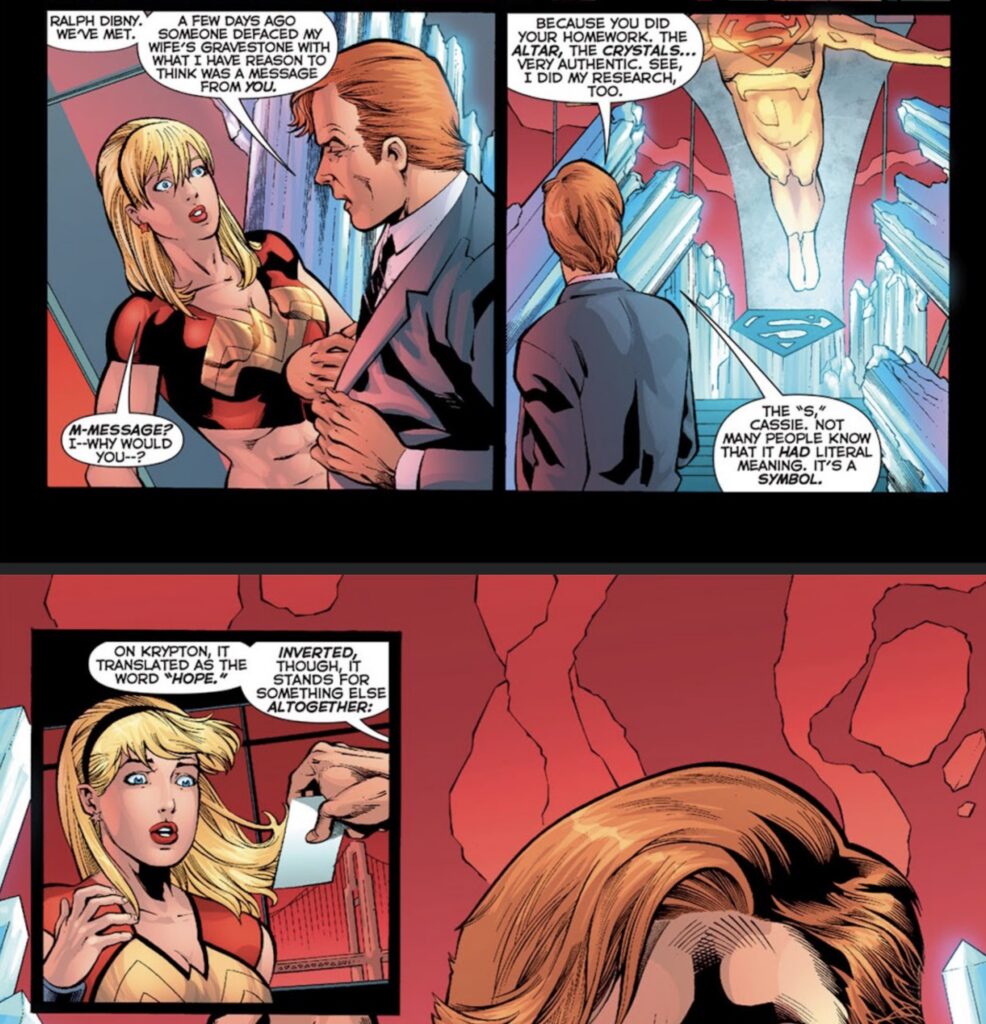
An inverted “S,” meanwhile, was said to mean “Resurrection”—a detail that has yet to gain meaningful traction within the Superman mythos.en el mito.
In 2009, Geoff Johns and Gary Frank retold the origin story in Superman: Secret Origin. It revisits many familiar elements almost beat-for-beat: the suit sewn by Ma Kent using Kryptonian fabric, the symbol as the El family crest, and Lois christening him “Superman.” Concepts from the pre-Crisis era also return—such as the idea that the suit is made from Clark’s baby blankets and his glasses being crafted from the remains of his ship:
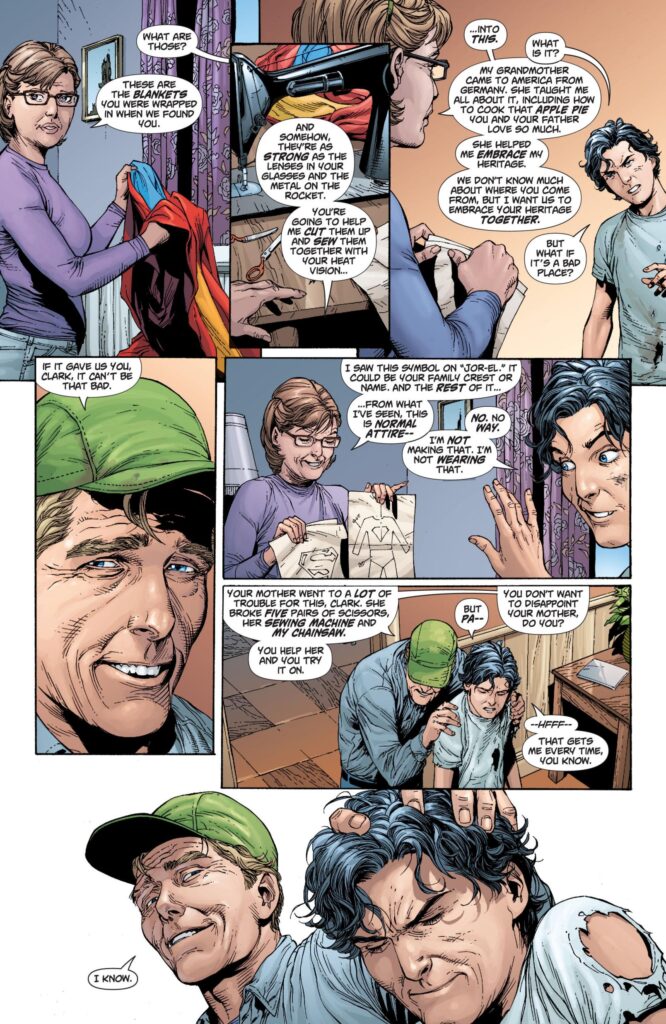
However, Secret Origin introduces a curious paradox: Clark begins his heroic career as a youth, allowing for his adventures with the Legion of Super-Heroes in the future—but he does not receive the name “Superman” until Lois bestows it years later. Johns avoids the paradox by having the Legionnaires refer to him only as “Kal-El,” preserving the timeline while still acknowledging both traditions. This reflects the difficulty authors face when attempting to reconcile conflicting canonical elements: they want Lois to name him, but also want his Superboy era intact. Waid would later find a the way to have this elusive cake and eat it, too.
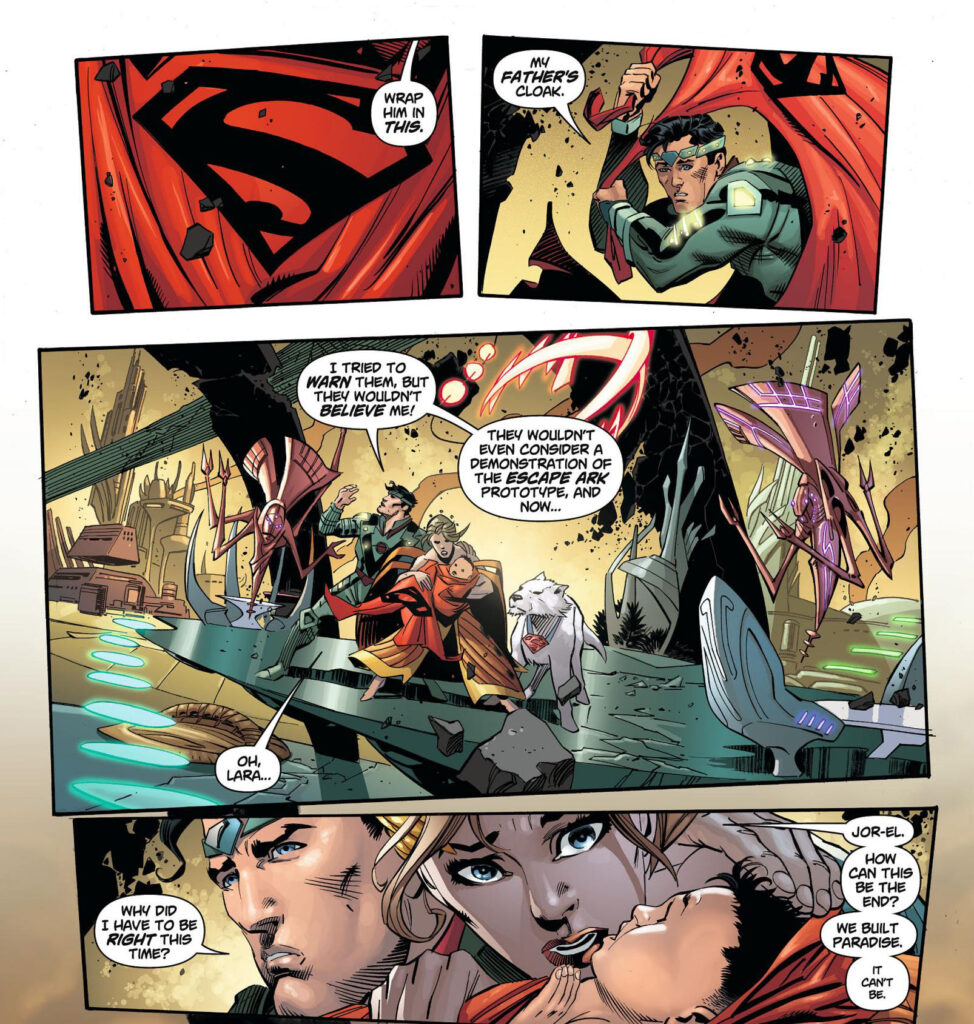
In 2011, another reboot came with Flashpoint, bringing a new Superman origin courtesy of Grant Morrison. In Action Comics Vol. 2 #5, we see that although Jor-El does not wear the symbol himself (though his dog does wear it on his collar), the emblem originates on Krypton and is tied to the House of El—though no deeper meaning is initially provided.
Superman’s first costume in this new continuity is a simple t-shirt bearing a stylized “S.” Later issues reveal a Kryptonian battle armor, discovered by Kal-El aboard The Collector/Brainiac’s ship, in Action Comics Vol. 2 #7.
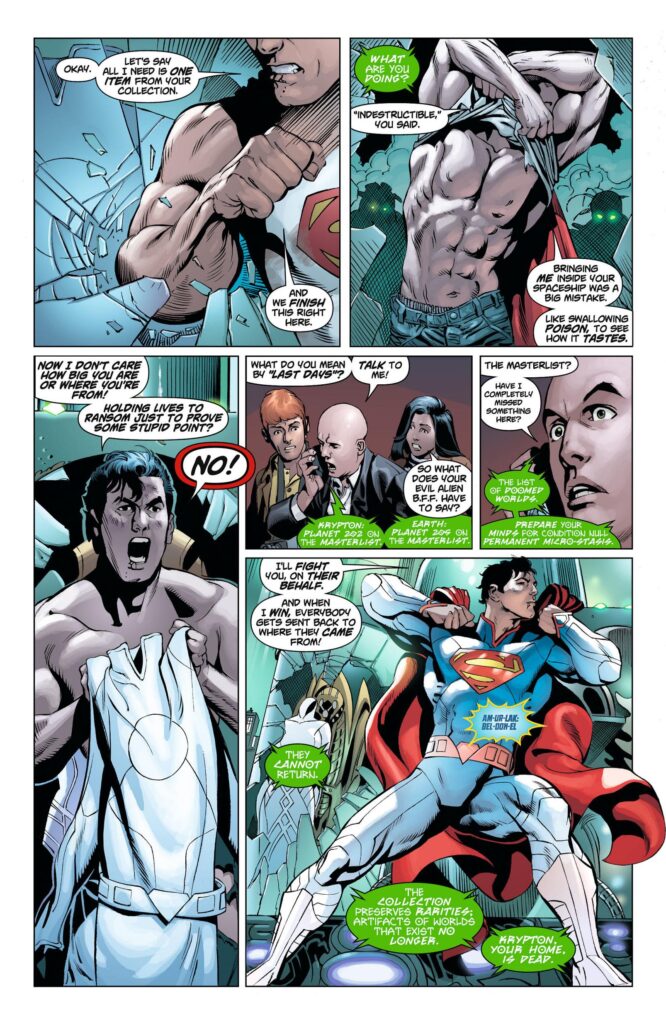
In Man of Steel (2013), the suit and symbol are explicitly of alien origin, and the character states it’s not an “S” but “Hope” on his world. Here, it’s random soldiers who coin his alter ego’s name.

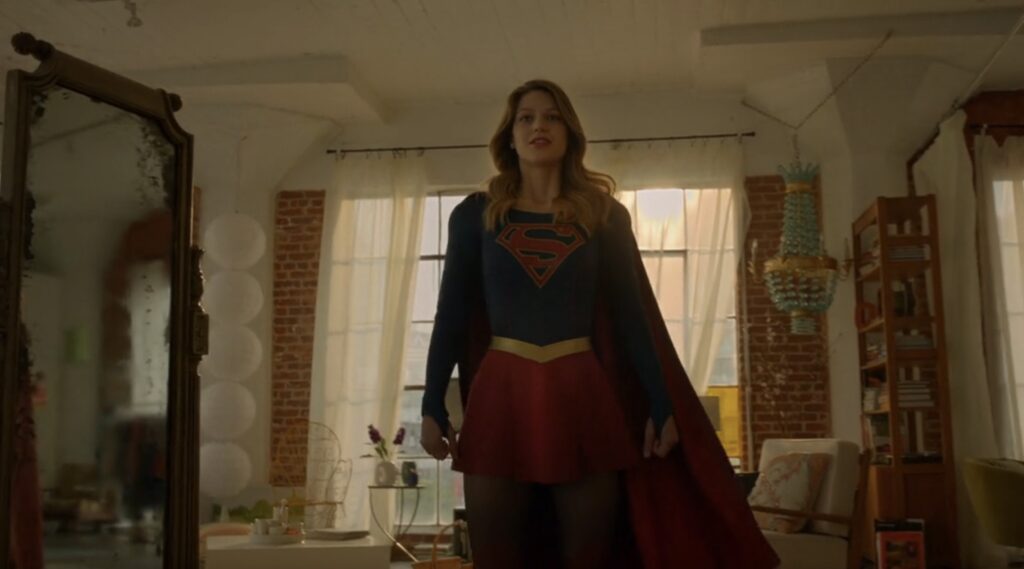
In 2015, Supergirl was added to The CW’s lineup of superhero television series, starring the endearing Melissa Benoist in the title role. The series adopted the character’s more recent origin, in which Kara is older than her cousin Kal-El but, due to cosmic deviations, arrives on Earth younger than him. Together with her best friend, she designs a costume and adds the symbol to it—clarifying that it is not an “S,” but rather the Coat of Arms of the House of El. In the second episode, its meaning is further expanded: in Kryptonese, it is El mayarah, which translates to “Stronger together.”
This series also marked the debut of Tyler Hoechlin as Superman in a role praised for the warmth and humanity he brought to the character; he would later reprise it as the lead in Superman & Lois. Although it was eventually revealed that the series took place in different universes, it can be theorized that Hoechlin’s Superman shares the same heraldic traits as Supergirl. In the prologue of Superman & Lois’s first episode, Hoechlin dons a suit inspired by the Fleischer cartoons—widely regarded as one of the best live-action adaptations of the costume to date. When a child compliments the suit, Superman responds, “Thanks, my mom made it,” echoing a similar line from Lois and Clark: The New Adventures of Superman and the comic Superman: For All Seasons by Jeph Loeb and Tim Sale.

In 2019, Gene Luen Yang and the artistic duo Gurihiru released Superman Smashes the Klan, a remarkable story frequently cited among the greatest in the Man of Steel’s history. The now-familiar elements appear once again: Ma Kent makes the suit, and the emblem represents the House of El, carrying the literal meaning of “Hope.”
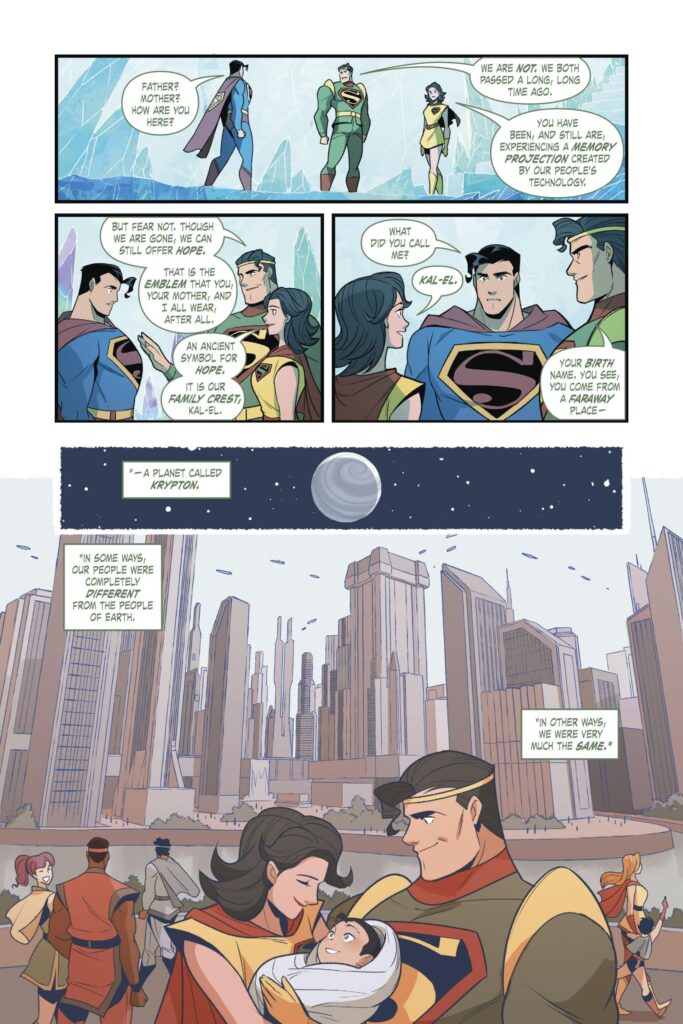
That same year, veteran Superman writer Marv Wolfman published Man and Superman, a story originally planned for release in 2009. Collaborating with artist Claudio Castellini, Wolfman retells Clark Kent’s arrival in Metropolis and his initial acts of heroism. While the narrative offers no specific explanation regarding the suit or the symbol, it revisits elements such as Clark using his powers prior to publicly donning his costume (despite it already being made). Additionally, although it is Clark himself who first writes about his alter ego under the recurrent ethically ambiguous circumstances, it is Lois who ultimately names him.
In 2023, Superman returned to serialized animation with My Adventures with Superman, developed by Jake Wyatt with animation by the Korean studio StudioMIR, and with Jack Quaid and Alice Lee voicing the lead characters. The sequence of events once again draws from John Byrne’s interpretation: Clark publicly displays his powers before wearing a costume, and it is Lois who enthusiastically coins the name “Superman.” Later, Clark confronts his extraterrestrial heritage through an encounter with an AI of Jor-El, during which he is seen wearing the crest.

Kryptonian technology is what ultimately develops Superman’s suit, as revealed shortly thereafter.
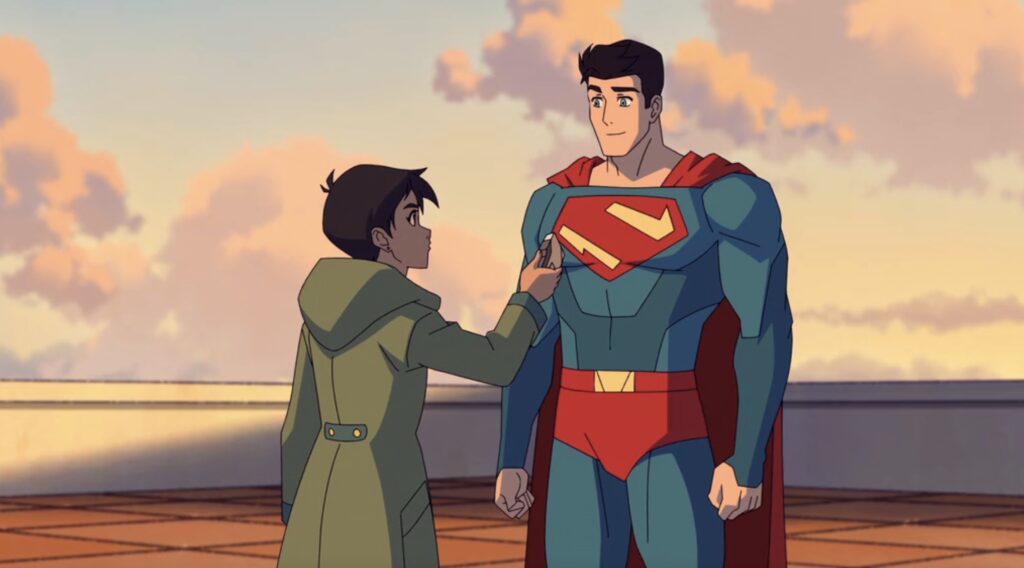
Notably, while Jor-El wears the abstract and highly stylized emblem designed by Alex Ross for the future Superman in the classic Kingdom Come, the version worn by Superman emphasizes the features that make it recognizable as an “S”—suggesting that Clark influenced its design at the moment of the suit’s creation to make it appear more terrestrial. Another memorable moment is when Ma Kent sees the costume and remarks that it is “incomplete,” prompting her to sew the iconic red trunks. My Adventures with Superman blends Kryptonian and earthly elements in crafting the superhero’s identity, making it one of the most noteworthy adaptations of the Man of Steel.
In 2024, DC Comics launched the Absolute line, discarding many traditional elements of its superheroes in order to retell their stories in a new and accessible way. Absolute Superman, by Jason Aaron and Rafa Sandoval, offers yet another interpretation of the emblem’s meaning:
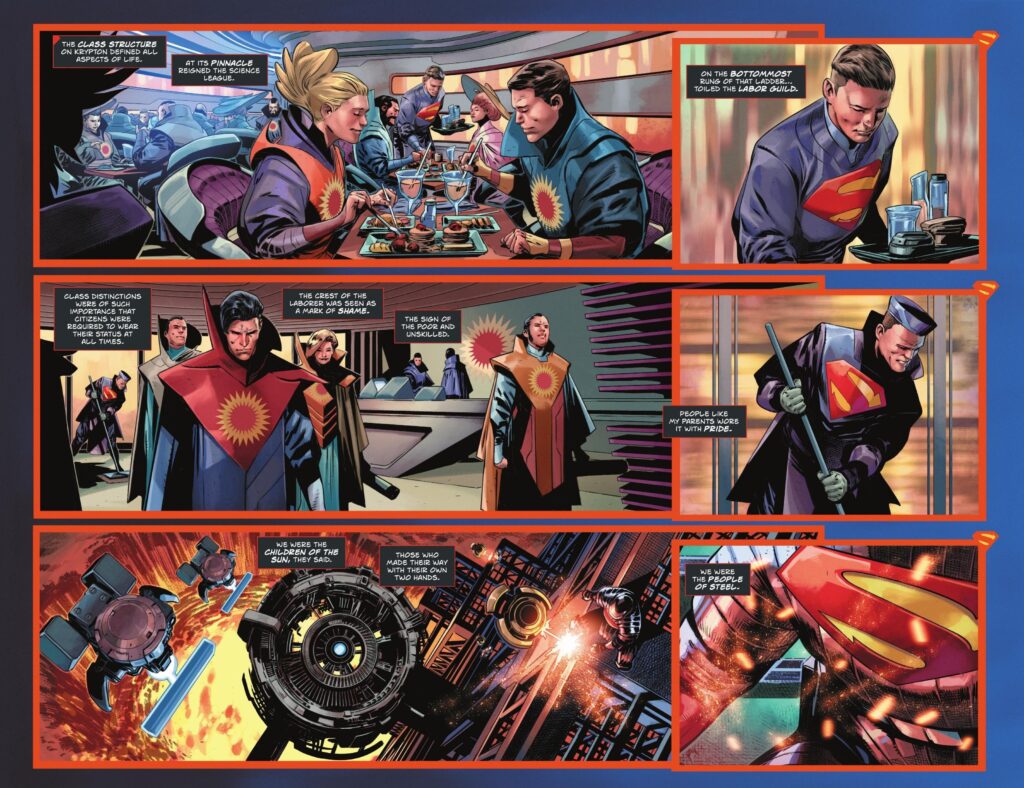
In this version, Jor-El and Lara retain their intelligence and rebellious spirit, but unlike other iterations, their revolutionary nature emerges long before Krypton’s destruction. As a result, they are cast out of Krypton’s ruling class and forced to join the working class—the People of Steel, represented by the “S” emblem, which they both wear with pride. Of all the origins and backgrounds that have been given to the “S,” this may be the one that most closely aligns with the “Champion of the Oppressed” ethos that Superman’s creators originally envisioned in 1938.
At the time of writing, Superman’s official origin in the main continuity remains in flux. The new lore guide The New History of the DC Universe, written by Mark Waid, references both Birthright and Secret Origin, while Action Comics presents a new account of Clark’s youth, portraying him as operating semi-publicly in a homemade suit. Waid—an author cited multiple times throughout this discussion—ultimately finds the most clever and elegant solution for Superboy’s existence, with Lois being the one to name him in Action Comics #1088:
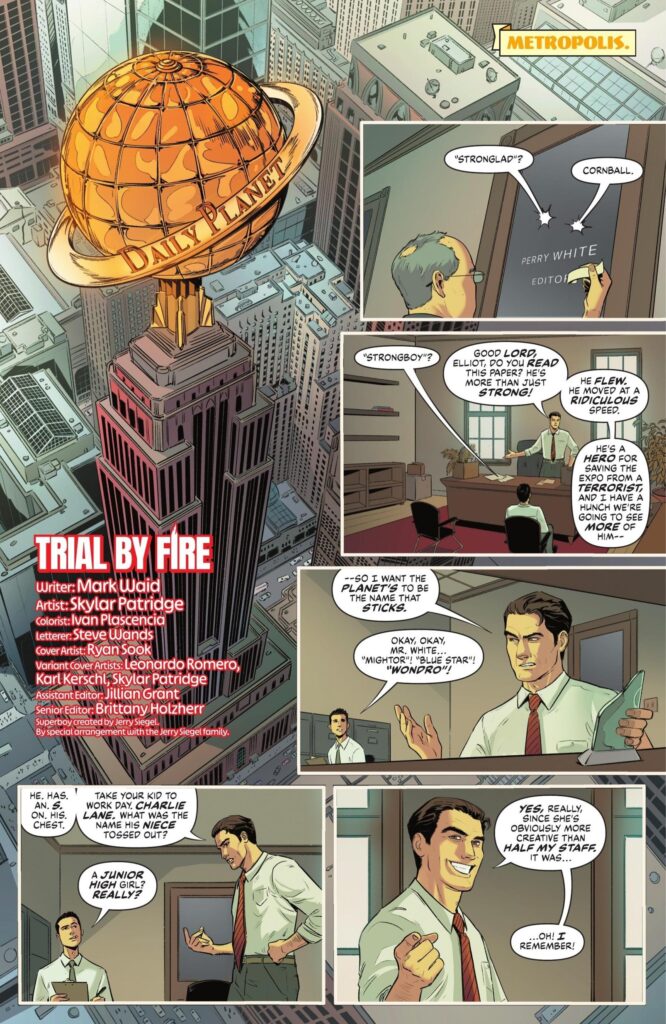
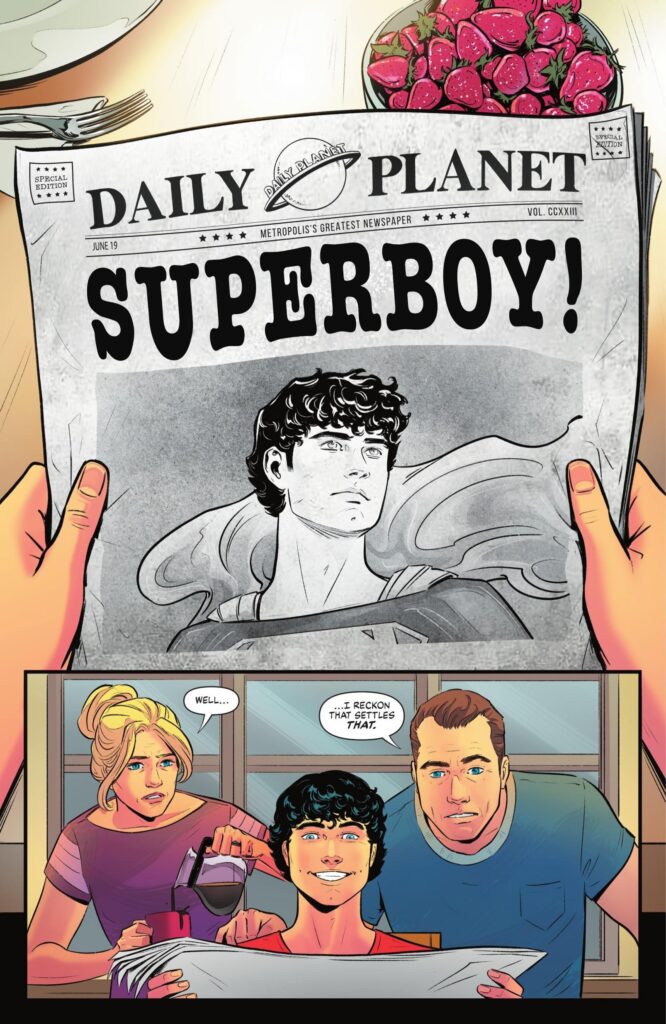
Lois Lane, a high school student who happens to be visiting the Daily Planet when Clark acts publicly, is the one who christens him “Superboy.”
Finally, we arrive at the most recent cinematic version: Superman, written and directed by acclaimed superhero filmmaker James Gunn, with the charming David Corenswet stepping into the role once held by Christopher Reeve. This portrayal of Superman is dynamic and modern, yet retains traditional elements. It adopts what appears to be a Kryptonian origin for the symbol—also inspired by Alex Ross’s design—highlighted by its prominent display at the entrance of the Fortress of Solitude. However, little more is known at this point.

Jor-El and Lara, in their brief—and controversial—appearance, do not wear the emblem, leaving their connection to it unclear. A young adult prequel novel, Superman: Welcome to Metropolis, offers few answers. Thus, we must wait to see what the future holds for this new incarnation.

To conclude, here are a couple of additional versions that stand out due to their peculiarity.